

COMMANDER X
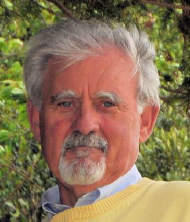
Robert Curtis

Enjoy our stories?
Join our Readers List for updates.
SHORT BIO:
Robert F. Curtis gained entry into the Army’s Warrant Officer Candidate program where he learned to fly, starting him on the path to a military career as an aviator in the Army, National Guard, and Marine Corps, and as an exchange officer with the British Royal Navy. After service in Vietnam he attended the University of Kentucky, graduating with honors with a bachelor’s degree in political science. Later, while serving at Naval Air Systems Command in Washington, D.C., Robert completed a master’s degree in procurement and acquisition management at Webster University. Robert is an FAA certified commercial pilot in both helicopters and gyroplanes. His military awards include the Distinguished Flying Cross, Bronze Star, Purple Heart, and twenty-three Air Medals
Commander X
“I know it’s spelled Jones, but it’s pronounced Throatwarbler-Mangrove”, so goes an approximation of a Monty Python bit. With the British you never know about names. A friend named John Snowball was considered to have a perfectly normal family name. Ralph might be pronounced “Rafe”. One British officer answered my phone call by saying, “Simon, “The Lord” Tremaine here.” Was “the Lord” a name or a title? But what of a friend, or perhaps more correctly described as a colleague, who has no name? While I am certain that the man under discussion has perfectly good and proper names first and last, plus almost certainly a middle name to go with the other two, but none of which he ever shared with me. Not that I asked his name, it just never seemed it was the proper thing to do when one is working with someone who, by the nature of his job prefers, or perhaps is required, to remain anonymous.
In the dim past I was a helicopter pilot in the United States Marine Corps. My job was to fly CH-46 “Sea Knight” medium lift helicopters in support of the Marine Infantry, Artillery, and other functions as required. Through a happy circumstance, I was offered and immediately accepted, a two-year exchange tour with a British Royal Navy Commando Helicopter squadron. I swapped my Sea Knight helicopter for a Sea King helicopter and was soon ready to be deployed in support of the British forces in much the same mission I had been performing in the Marine Corps. The first deployment that I was to command was a two-helicopter operation in an exercise simulating recovery of an oil rig off the east coast of England after it had been seized by terrorists. In the typical British way of naming things this exercise was called a “Prawn Salad”.
When informed I would be leading the aviation portion of this Prawn Salad, I pointed out that I had had no training in this sort of operation but never mind I was told, one of the fellows will explain it to you. So, off I was, leading my flight to a Royal Air Force (RAF) base where we would stage for the exercise. When we arrived at the RAF base one of my fellow aviators did in fact explain it to me. Straight forward enough, even if terrifying in execution for a beginner. My two Sea Kings would orbit in a figure eight pattern downwind from the rig, one helicopter at 200 feet and the other at 300 feet, under the control of another Sea King, this one radar equipped. It was critical to be downwind of the rig so that the terrorists wouldn’t hear the sound of our birds and do something awful, as terrorist are wont to do.
At the appropriate time, “push time” in military terms, the first helicopter, mine, would drop down to 100 feet and head towards the rig. Did I mention that this was all done in the dark over the North Sea? I asked at what point was I to climb up to be above the rig’s helipad only to be told to fly directly at it until “you can’t stand it anymore”, then pop up. Once above the helipad, my crewman would throw out a 100-foot-long rope attached to the helicopter’s winch and the 18-man assault force would “fast rope” (slide down the rope only lightly touching it with heavy gloves, much quicker that rappelling, much more dangerous too) down to the steel deck. All 18 men would clear the helicopter in around 15 seconds. By the time the last commando was on the oil rig deck, the second Sea King would be disgorging its load in the same spot. By then the first wave of commandos would have forced their way into the rig, clearing all the bad guys in their way. Pity the terrorist that had to face them.
As I mentioned, to a very experienced combat trained helicopter pilot like me, this mission, while high tension in some respects (dark, 100 feet over the North Sea, etc.), was fairly straight- forward. I had performed combinations of nearly the same steps many times. Not so much for the commandos doing the actual storming and re-taking the rig, though. Every rig is different in design and requires the most detailed planning for each operation. That’s where I met Command X.
Because it was my first Prawn Salad, I was invited to a briefing on how it was executed once the attacking force was onboard the oil rig. As part of their preparation the commandos had requisitioned an aircraft hangar. On the floor of the hangar, they had marked out in tape the deck plan of the oil rig. My guide for the briefing was a man in a boiler suit, a one-piece flight suit sort of outfit. Although his uniform had Velcro where unit patches should have been, there were no markings at all to be seen, nor was there a name tag. My guide was perhaps in his early 30s. Of average height, he appeared fit but not overly muscular. His hair was neither too short nor too long. He was definitely not the stereotypical commando in that if you passed him on the street, you wouldn’t have noticed him at all.
“Hello, Bob”, he smilingly greeted me. It appeared that he had been briefed on me and knew I held the proper clearance to see what he was about to show me. He made no attempt to introduce himself and I didn’t ask. All rather mysterious, I thought. I decided on the spot to call him “Commander X”, although there was no sign he was a commander or even in the Royal Navy, for that matter. We walked through the mockups of the oil rig’s flight deck and command decks as he explained in vague terms what they would be doing. Polite and cordial, his briefing was just enough to make the operation seem routine, boring almost. In return I briefed him on what the aviation element would be doing. While he smiled and nodded at the appropriate places, I figured that he already knew everything I was telling him. Thankfully, he didn’t ask any questions or point out those items I had left out.
After a practice run in the daytime, we executed our Prawn Salad the next night. All went as planned and briefed, mission complete with bad guys vanquished and the rig back in British hands. There was no debrief and I thought I had seen the last of Commander X. And so I had until the next winter.
In the winter, the Royal Marines and Royal Navy Commando Helicopter squadrons have the NATO mission of assisting the Norwegian in the defense of the northern part of their country. From January through March my squadron was based at Bardufoss, about 200 miles north of the Arctic Circle. There we did the usual things: combat assaults, troop transfers, and resupply both with internal and external cargo. Offen we would fly long distances over vast snow fields, with civilization many miles away in any given direction.
On one such mission, I was flying along just admiring the Norwegian winter scene below me, a military tourist, if you will, when I felt a tap on my shoulder. Looking around there was Commander X. He was dressed in civilian clothes appropriate for long distance cross-country skiing and had a big smile on his face. He had boarded my helicopter at the last stop unnoticed by me, as is appropriate for someone in his line of work.
“Hello, Bob. Nice to see you again. Would you mind awfully dropping me off down there?”, he said while pointing at the nearly featureless snow field below.
By my estimate we were 40-some-odd miles from the nearest village. The temperature was around 25 degrees below zero and, since it was January in northern Norway, it would soon be dark for 18 to 20 hours. The snow on the ground ranged from three to five feet in most places. None of this appeared to deter Commander X in any way.
“Of course”, I replied. “Is down by that big boulder good for you?”
He nodded yes, still smiling. To land in deep, loose snow you must have a ground reference to watch as you touch down, lest you become disoriented and lose control. A big rock works just fine for me so I set up my approach for landing. Soon everything except the rock disappeared in a snow cloud as I brought the helicopter to a low hover. The ground was slopped so I couldn’t put all three wheels on the surface. Instead, I landed one of the main wheels and held the other two off, keeping the aircraft level while Commander X disembarked. When my crewman told me he was clear I lifted off again. When I reached 200 feet, I circled back to check on him. There he was, skis on, pack on his back, and already started off on whatever his mission was. He waved a ski pole in my direction as I flew past.
Late that summer I was in Gibraltar on a deployment aboard a British aircraft carrier. The ship was docked for a couple days, so I at last had some time off. The Royal Gibraltar Yacht Club extended courtesy membership to visiting officers, so I took advantage of the offer and settled in at a table overlooking the bay for a drink and dinner. I had just taken the first sip of my beer and was looking out across the water to the lights of Spain when one of the chairs at my table slid back and Commander X sat down. In civilian clothes, he looked as ordinary as ordinary can be.
“Hello, Bob. Nice to see you again. Do you sail?”, he said, fanning his right hand out at the sailboats docked in front of us.
So began our conversation. Over drinks and dinner for the next two hours we discussed the merits of different kinds of sailboats and told stories of sailing adventures, mishaps and regattas won and lost. Never once did either of us mention our work or missions past or future. The evening was just two old friends, relaxing next to the water and enjoying the Gibraltar evening. Finished with dinner, we shook hands and parted ways. Three years later three Irish Republican Army men were shot to death without warning in Gibraltar.
I saw Commander X one more time. On my very last exercise with the Royal Navy, I had flown a Sea King from southwestern England over to the Royal Dutch Navy Base at Den Helder to work with the Dutch Marines for three days. Exercise over, on the third day I was taxiing my helicopter past the base operations building on the way to the runway for the two-hour flight home. I glanced over to my right and there standing on the grass next to the taxiway was Commander X, once again in a combat uniform with no patches or name tag. He smiled and gave me a Royal Navy salute. As I returned his salute I imagined I could hear him saying, “Goodbye, Bob”.
*** end ***