
HOME
Enjoy our stories?
Join our Readers List for updates.
SHORT BIO:
Jennifer H. Lutz is a former English teacher and Interior Designer. She grew up in Newbury and Newburyport, Massachusetts, finished college, and married a military man, traveling across the United States and Hawaii. In 2021 she became a Lay Minister for ALL PATHS TO GOD CHURCH, a Religious Science Organization. Today she specializes in color analysis and healing, herbs, and essential oils. She enjoys writing, music, sewing, and exploring spirituality.
Home
On the north shore of Massachusetts sits an ancient harbor-town called Newburyport. I love my hometown. It’s very old, rich in history, and salty. The sea is in its blood.
There is a certain point on Route 1, as I drive north along the highway toward home, where I can roll down the window in my car and smell the salt air. It is very strong and crisp. It starts where the road meets the open marsh. Gazing out over this wetland, you notice three distinct mounds of hay; a picture that has been captured on canvas by many artists over a myriad of time. The mystery lies in how long they’ve been there! The hay sits, a deep golden brown along the grassy green expanse, as a marker along the highway. Open cricks, or ditches, meander through the marsh carrying water to the Parker River, which undulates slowly toward the Atlantic Ocean.
It is a sultry day. The wind blows its hot breath on my face as I step out of the car. I just want to take a minute to breathe deeply. The taste and smell of the salt and sulphur marsh touch my very soul. “Dead things,” I hear my husband say. “You like the smell of dead things.”
The truth is the marsh is not only made up of salt water, mud, and sea grass, but also of the living things that grow there. The wildlife are born, live, and die as we all do, but they get to stay in the environment in which they grew.
My roots are deep in this place of dead things, for truly it is teeming with life. The area is surrounded by hay fields. Pine woods edge the muddy ground in clumps, forming little islands. Small fish and eels swim in the wide cricks. Along the banks clams, mussels, and oysters burrow into the mud, multiplying. Egrets and seagulls, heron, and geese fly freely, diving into the rivers to collect their lunch. Life is peaceful here.
The salt air mixes with the fragrance of the pines and wildflowers to create a heady aroma that, if bottled, would sell for millions. Colors of the marsh are vivid; golds and yellows-greens make up the thin sea grass. Shades of red and violet cover the heather that spreads across the land. Pink morning glories and purple-lu-strife dot the sides of the roads. The sun beats down, baking everything in its wake like a hot oven.
“Forget the air-conditioning!” I yell to no one in particular. Pressing a button that brings the convertible top down on my little car, I grab my baseball cap to protect my eyes from the sun. Now, I feel free again!
Continuing on my journey, I turn east onto Boston Road. It is narrow, ribbon-like. When the tide is extra high with the moon phases, it’s flooded. I remember traveling over the old rickety bridge on my bus route home from school. The bus driver never slowed down when he got to this bridge. A bunch of us would vie for the two back seats as we approached the bridge. The bus would fly over the bridge and we would be launched, air-born for the few seconds it took to drive over the wooden structure. What fun! We’d laugh and scream, and our dear bus driver would laugh along with us. It all seems like a dream so long ago.
The road ends on Route 1A. I turn right, heading south. I want to drive over the Parker River to check out the changes that have taken place since I’ve been gone. Approaching the bridge, I look out past the marsh to see sailboats dotting the horizon. Many different boats are moored at the marina. There are sloops, dinghies, and motorboats of all sizes. Activity is going all around me as I pull in to the Olde Newbury Country Club. People are mulling about on the docks calling to each other. “What a beautiful day!” I hear. “Hey Jim, are you going out today?” “Yeah, but I’m waiting for the tide to change.” Ooh, deja-vu! The same scene has been taking place for over 200 years when the original docks were first built.
I start to approach the docks when I’m stopped in my tracks by another odor- fried clams! Oh, wow! They’ve opened the little clam stand! Well, I’ll just visit the docks later. Right now I’ve just got to order some clams and onion rings, more smells that mix well with the salt air.
I pop a succulent fried clam into my mouth as I stroll along the docks, moaning in pure pleasure as I swallow; the clam slides down my throat. It’s been over a year since I’ve tasted one. The north shore of Massachusetts boasts of many wonderful seafood restaurants, and I plan to try every one while I’m here.
Back in my car, I drive over the Parker River bridge again heading north toward Newburyport. This part of town is called Olde Newbury, the original settlement. This is where I grew up, and I’m very proud of it. Newbury was settled in 1632 by a group of people who had just arrived in Boston. They were persuaded to help establish the northern boundary of the Massachusetts Bay Colony against rival claims. Here, on the northern edge of the Parker River, is where they built their first town. The soil was rich for agriculture. This, combined with the excellent resources of the sea, made it an ideal location for a settlement. These early settlers soon learned just how resourceful this area was when they surveyed the larger Merrimac River further up the coast and its easy access to the Atlantic Ocean. Olde Newbury created a world-wide shipping trade in a very short period of time, and a large port was maintained that eventually became Newburyport. Clipper ships like the Flying Cloud, built right in Newburyport, became famous for their speed. Olde Newbury was in the running for the new capital of Massachusetts, then disaster struck! A sand bar moved into the middle of the Merrimac River, cutting off the deep waters needed to moor the clipper ships and schooners. World trade became more difficult, Boston became the capital, and Newburyport settled down to a quieter way of life.
Driving along High Road, I’m deep in thought of this historical town. I pass the first schoolhouse on the Lower Green. Many old original houses, some dating back to the 1600’s, are still occupied. I went to school with the descendants of the first settlers. I, too, fall into that category.
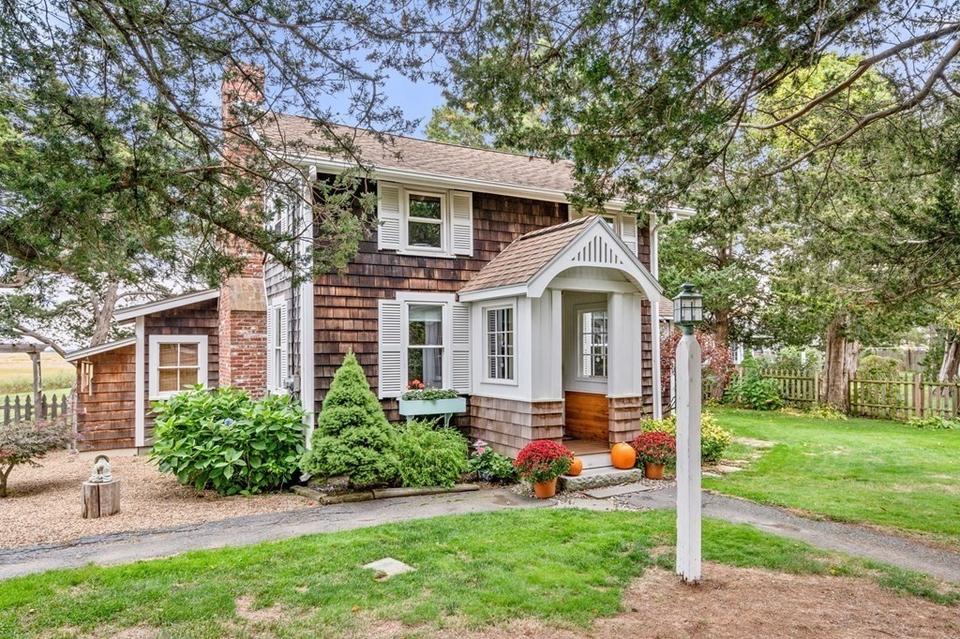
Turning right onto Pine Island Road, I drive past the woods to open marsh. My little car rounds the bend and there, at the end of the road, is the little island on which I grew up. To the right in the middle of the marsh is Cassie’s Rock, a small mountain that some ancient glacier dropped off in the stone age on its way to the sea; a place of meditation, and where I received my first kiss. The air is sweet and the breeze warm as I pull into the driveway of my parents’ cottage. I have come home.
* * * end * * *